


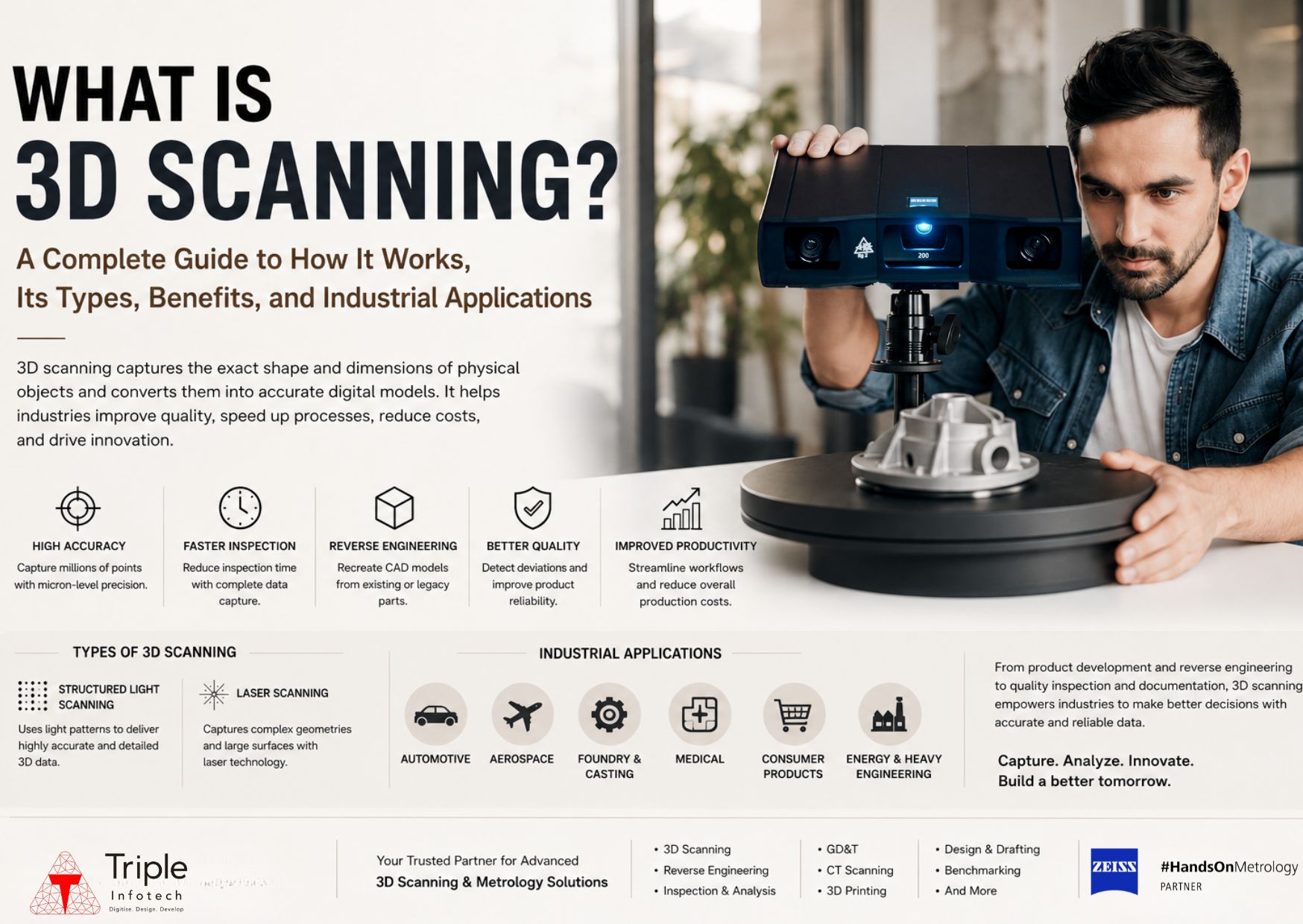

3D scanning has become an essential technology for modern manufacturing, engineering, quality control, product development, and reverse engineering. By capturing the physical shape of an object and converting it into accurate digital 3D data, 3D scanning helps engineers and manufacturers understand, inspect, reproduce, and improve physical components.
From automotive and aerospace parts to industrial machinery, molds, castings, and consumer products, 3D scanning technology provides a faster and more comprehensive way to measure and analyze complex geometries.
In this guide, we explore what 3D scanning is, how it works, its different technologies, industrial applications, benefits, and how businesses can use 3D scanning services to improve their engineering and manufacturing processes.
What Is 3D Scanning?
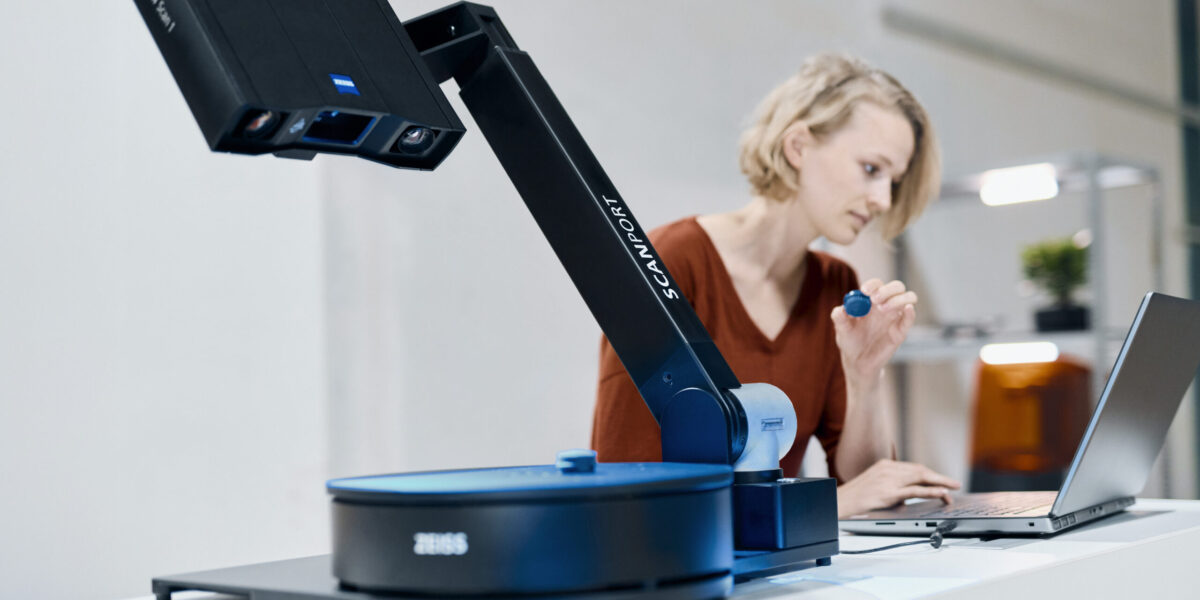
3D scanning is the process of capturing the physical geometry of an object and converting it into digital three-dimensional data.
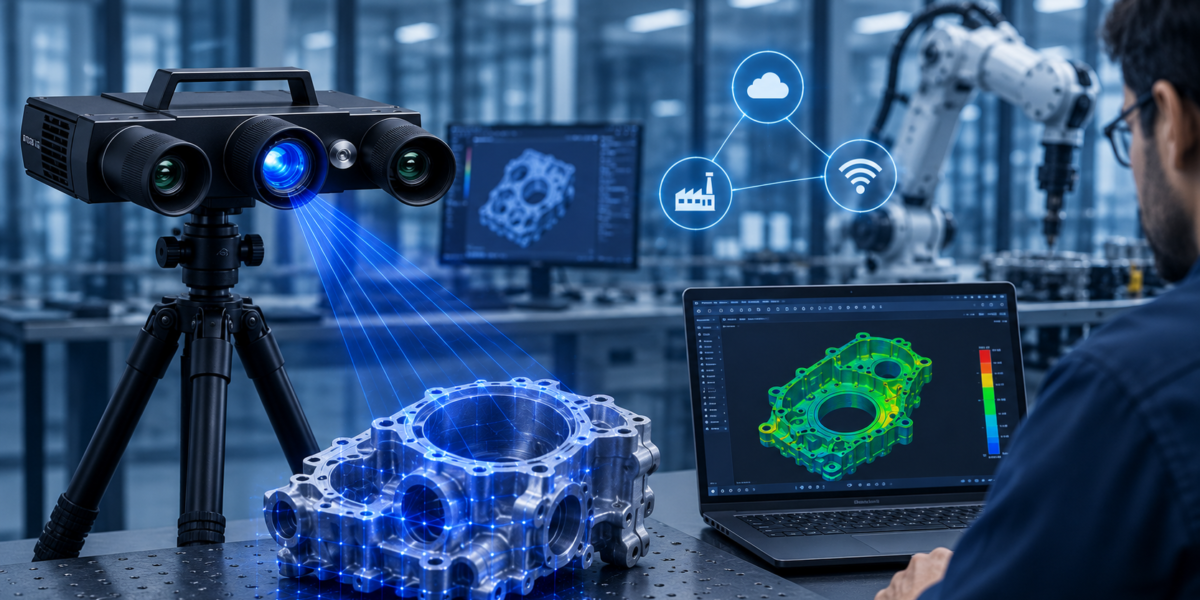
A 3D scanner captures thousands or millions of measurement points from the surface of a component. These points are processed to create a 3D point cloud or polygon mesh, which can then be used for inspection, reverse engineering, CAD comparison, documentation, and other engineering applications.
Unlike traditional measurement methods that typically capture individual dimensions, 3D scanning can capture the complete surface geometry of a component.
This makes it particularly useful for components with:
- Complex curves
- Free-form surfaces
- Organic shapes
- Difficult-to-access areas
- Large or irregular geometries
- Numerous features that need to be measured simultaneously
How Does 3D Scanning Work?
Although different scanners use different technologies, the general workflow consists of several steps.
1. Object Preparation
The component is prepared for scanning. Depending on the scanner and surface characteristics, preparation may include applying reference markers or using a suitable scanning setup.
2. Data Capture
The scanner projects or uses a light source to capture the geometry of the physical object.
Depending on the technology, this may involve:
- Blue light
- Laser light
- Structured light
- Photogrammetry
- Computed tomography (CT)
Multiple scans may be taken from different angles to capture the complete component.
3. Point Cloud Generation
The captured measurements are converted into a point cloud, which represents the physical surface using a large number of measurement points.
4. 3D Mesh Creation
The point cloud can be converted into a polygonal mesh, creating a digital representation of the physical component.
5. Data Processing
The scan data is cleaned, aligned, merged, and processed using specialized 3d scanning software.
6. Engineering Analysis
The resulting digital model can be compared with CAD data, used for reverse engineering, dimensional inspection, GD&T analysis, or other engineering applications.
Types of 3D Scanning Technologies
Different 3D scanning technologies are suitable for different applications. Choosing the right technology depends on factors such as component size, surface finish, required accuracy, geometry, and inspection requirements.
1. Structured Light 3D Scanning
Structured light scanners project a known pattern of light onto the component. Cameras capture how the pattern changes across the surface, allowing the system to calculate the object’s three-dimensional geometry.
Advantages include:
- Fast data acquisition
- High-resolution surface capture
- Excellent coverage of complex geometry
- Suitable for quality inspection
- Useful for reverse engineering
Structured light scanning is widely used in automotive, aerospace, manufacturing, product development, and quality control.
2. Laser 3D Scanning
Laser scanners use laser lines or laser points to capture surface geometry.
They are commonly used for:
- Industrial inspection
- Reverse engineering
- Large components
- Complex mechanical parts
- Dimensional measurement
- Manufacturing quality control
Laser scanning can be particularly useful where portability, flexibility, and detailed surface measurement are important.
3. Photogrammetry
Photogrammetry uses photographs captured from multiple positions to determine the spatial relationship between points.
It is particularly useful for:
- Large components
- Vehicles
- Industrial structures
- Aerospace applications
- Large-scale dimensional measurement
Photogrammetry can also be combined with other 3D scanning technologies to improve measurement accuracy and establish a larger measurement reference system.
4. CT Scanning
Computed tomography, or CT scanning, captures both external and internal geometry.
Unlike conventional optical 3D scanning, CT scanning can inspect features that cannot be accessed from the outside.
It can be used to analyze:
- Internal cavities
- Porosity
- Voids
- Wall thickness
- Internal channels
- Assembly conditions
- Hidden defects
CT scanning is particularly valuable for complex plastic components, castings, electronics, medical components, and other parts where internal geometry is important.
3D Scanning for Inspection and Quality Control
One of the most important industrial applications of 3D scanning is quality inspection.
Traditional inspection methods often rely on measuring selected points or individual features. 3D scanning can capture the entire surface, allowing engineers to visualize dimensional deviations across the component.
The scanned data can be aligned with the original CAD model and analyzed using a colour deviation map.
A typical colour map can show:
- Areas above nominal
- Areas below nominal
- Dimensional deviations
- Form errors
- Warpage
- Deformation
- Manufacturing variations
This provides engineers with a visual understanding of how the manufactured component differs from the original design.
3D Scanning for Reverse Engineering
Reverse engineering is another major application of 3D scanning.
When original CAD data, drawings, or design documentation are unavailable, a physical component can be scanned to create accurate digital reference data.
A typical reverse engineering workflow may include:
Physical Part → 3D Scan → Point Cloud/Mesh → Surface Extraction → CAD Reconstruction → Final CAD Model
This approach can help companies digitize:
- Legacy components
- Spare parts
- Replacement components
- Discontinued products
- Customized components
- Complex mechanical parts
The resulting CAD model can then be used for design modifications, manufacturing, simulation, or future product development.
3D Scanning for CAD Comparison
3D scan makes it possible to compare the actual manufactured component against the original CAD design.
The scan data is aligned with the CAD model, and the differences can be visualized using a colour deviation map.
For example, engineers can identify whether:
- A surface has warped
- A component has deformed
- A feature has shifted
- Machining has removed too much material
- A casting has dimensional variation
- A molded component has experienced shrinkage
This provides much more information than checking only a limited number of dimensions.
3D Scanning and GD&T Inspection
Geometric Dimensioning and Tolerancing (GD&T) is used to define how accurately manufactured features must conform to design requirements.
3D scanning can support GD&T inspection by providing detailed digital information about component geometry.
Depending on the inspection software and measurement strategy, engineers can evaluate characteristics such as:
- Position
- Flatness
- Straightness
- Circularity
- Cylindricity
- Profile
- Perpendicularity
- Parallelism
- Concentricity
This allows manufacturers to move beyond simple dimensional checks and perform more comprehensive geometric analysis.
3D Scanning for Warpage and Deformation Analysis
Manufactured components do not always retain their intended CAD geometry.
Processes such as:
- Injection molding
- Casting
- Welding
- Machining
- Heat treatment
- Additive manufacturing
can introduce deformation or dimensional variation.
3D scan provides a complete digital representation of the finished component, allowing engineers to visualize where and how deformation has occurred.
This information can be used to investigate manufacturing problems and improve process parameters.
Applications of 3D Scanning Across Industries
3D scan has applications across a wide range of industries.
Automotive
Automotive companies use 3D scan for:
- Component inspection
- Tool and die inspection
- Reverse engineering
- Body panel analysis
- Prototype validation
- Assembly verification
- CAD comparison
Aerospace
In aerospace manufacturing, precision and traceability are critical. 3D scanning can be used for:
- Complex component inspection
- Reverse engineering
- Surface analysis
- Assembly verification
- Dimensional inspection
- Maintenance and documentation
Manufacturing
Manufacturers can use 3D scan for:
- First article inspection
- Quality control
- Production validation
- Tool inspection
- Reverse engineering
- Process improvement
Foundries
For cast components, 3D scan can help identify:
- Casting deformation
- Dimensional variation
- Surface deviations
- Shrinkage
- Manufacturing defects
Injection Molding
3D scanning can be used to analyze molded components for:
- Warpage
- Shrinkage
- Dimensional variation
- CAD deviation
- Tooling-related issues
Tool and Die
3D scan can help inspect molds, dies, fixtures, and tooling for wear, deformation, and dimensional changes.
Product Development
Design and development teams can use 3D scanning to digitize physical prototypes and compare manufactured products against design intent.
Benefits of 3D Scanning
Faster Measurement
Large amounts of geometric information can be captured quickly compared with manually measuring individual features.
Complete Surface Data
Instead of measuring only selected points, 3D scan can capture the complete accessible surface.
Better Visualization
Colour maps and 3D inspection results make deviations easier to understand and communicate.
Supports Reverse Engineering
Physical components can be converted into useful digital reference data when original CAD information is unavailable.
Improved Quality Control
Manufacturers can identify dimensional variations and manufacturing issues earlier.
Digital Documentation
Scanned components can be digitally archived for future inspection, comparison, or engineering requirements.
Useful for Complex Geometry
Free-form surfaces and complex shapes that are difficult to measure using conventional tools can often be captured efficiently using 3D scanning.
3D Scanning vs Traditional Measurement Methods
Traditional tools such as vernier calipers, micrometers, height gauges, CMMs, and other measurement equipment continue to play an important role in dimensional inspection.
However, 3D scanning offers a different approach.
| Feature | Traditional Measurement | 3D Scanning |
|---|---|---|
| Measurement approach | Individual features/points | Large surface coverage |
| Complex geometry | Can be challenging | Highly suitable |
| Visual deviation analysis | Limited | Colour maps and 3D visualization |
| Reverse engineering | Limited | Highly suitable |
| Full surface analysis | Generally limited | Possible |
| Data storage | Individual measurements | Complete digital geometry |
| Inspection speed | Depends on number of features | Rapid surface capture |
The two technologies are not necessarily competitors. In many industrial environments, 3D scanning and traditional metrology complement each other.
What Factors Should You Consider When Choosing a 3D Scanner?
Choosing a 3D scanner should be based on the application rather than simply selecting the scanner with the highest specifications.
Important considerations include:
Accuracy
What level of measurement accuracy does the application require?
Component Size
Is the part a small mechanical component, an automotive panel, or a large industrial structure?
Geometry
Does the component contain deep pockets, sharp edges, free-form surfaces, or complex internal features?
Surface Finish
Reflective, transparent, dark, or highly textured surfaces may require specific scanning approaches.
Scanning Speed
For production inspection, fast data acquisition may be an important consideration.
Software
The scanner is only one part of the overall solution. Inspection and reverse engineering software are equally important for converting scan data into useful engineering information.
Required Output
Consider whether the final requirement is:
- Inspection report
- CAD comparison
- Mesh
- Point cloud
- Reverse-engineered CAD
- GD&T analysis
- Digital archive
3D Scanning Software
3D scan generates large amounts of data, so specialized software is required to process and analyze the results.
Depending on the application, software can support:
- Scan alignment
- Mesh generation
- CAD comparison
- Colour deviation maps
- Dimensional inspection
- GD&T analysis
- Reverse engineering
- Reporting
- Data management
Modern inspection platforms such as ZEISS INSPECT provide tools for analyzing optical 3D measurement data and generating detailed inspection results.
Why Businesses Use Professional 3D Scanning Services
Investing in a 3D scanner is not always the most practical solution for every company.
Professional 3D scanning services can provide access to specialized scanning equipment, trained engineers, inspection software, and engineering expertise without requiring a company to build an entire in-house scanning setup.
A professional 3D scanning service can support projects such as:
- Dimensional inspection
- Reverse engineering
- CAD comparison
- GD&T inspection
- First article inspection
- Tool and die inspection
- Warpage analysis
- Deformation analysis
- 3D scan for manufacturing
- Digital documentation
This can be especially useful for companies with occasional scanning requirements or projects requiring specialized equipment and expertise.
The Future of 3D Scanning
As manufacturing becomes increasingly digital, 3D scanning is becoming an important part of the digital engineering workflow.
The technology is moving beyond simple measurement toward integrated solutions involving:
3D Scanning → Inspection → Reverse Engineering → Manufacturing → Digital Quality Management
Integration with CAD, inspection software, automation, robotics, additive manufacturing, and digital quality systems is making 3D measurement more valuable throughout the product lifecycle.
For manufacturers, the objective is no longer simply to know whether a part is within tolerance.
The bigger question is:
What is happening to the part, why is it happening, and how can the manufacturing process be improved?
3D scan provides the data needed to answer these questions.
Conclusion
3D scanning has transformed the way engineers and manufacturers capture, inspect, analyze, and understand physical components.
From quality inspection and CAD comparison to reverse engineering, GD&T, warpage analysis, and product development, 3D scan provides a powerful bridge between the physical and digital worlds.
As manufacturing continues to adopt digital technologies, businesses that can quickly capture and analyze accurate 3D data can make better engineering decisions, improve quality, reduce inspection time, and accelerate product development.
Whether you need to inspect a manufactured component, reverse engineer a legacy part, analyze deformation, or digitize a complex product, the right 3D scanning technology and professional expertise can turn physical geometry into actionable engineering data.
Looking for Professional 3D Scanning Services?
Triple Infotech provides 3D scanning, inspection, reverse engineering, GD&T analysis, and related engineering solutions for manufacturing and industrial applications.
Get in touch with our team to discuss your component, inspection requirement, or reverse engineering project.

 India
India Middle East